















News
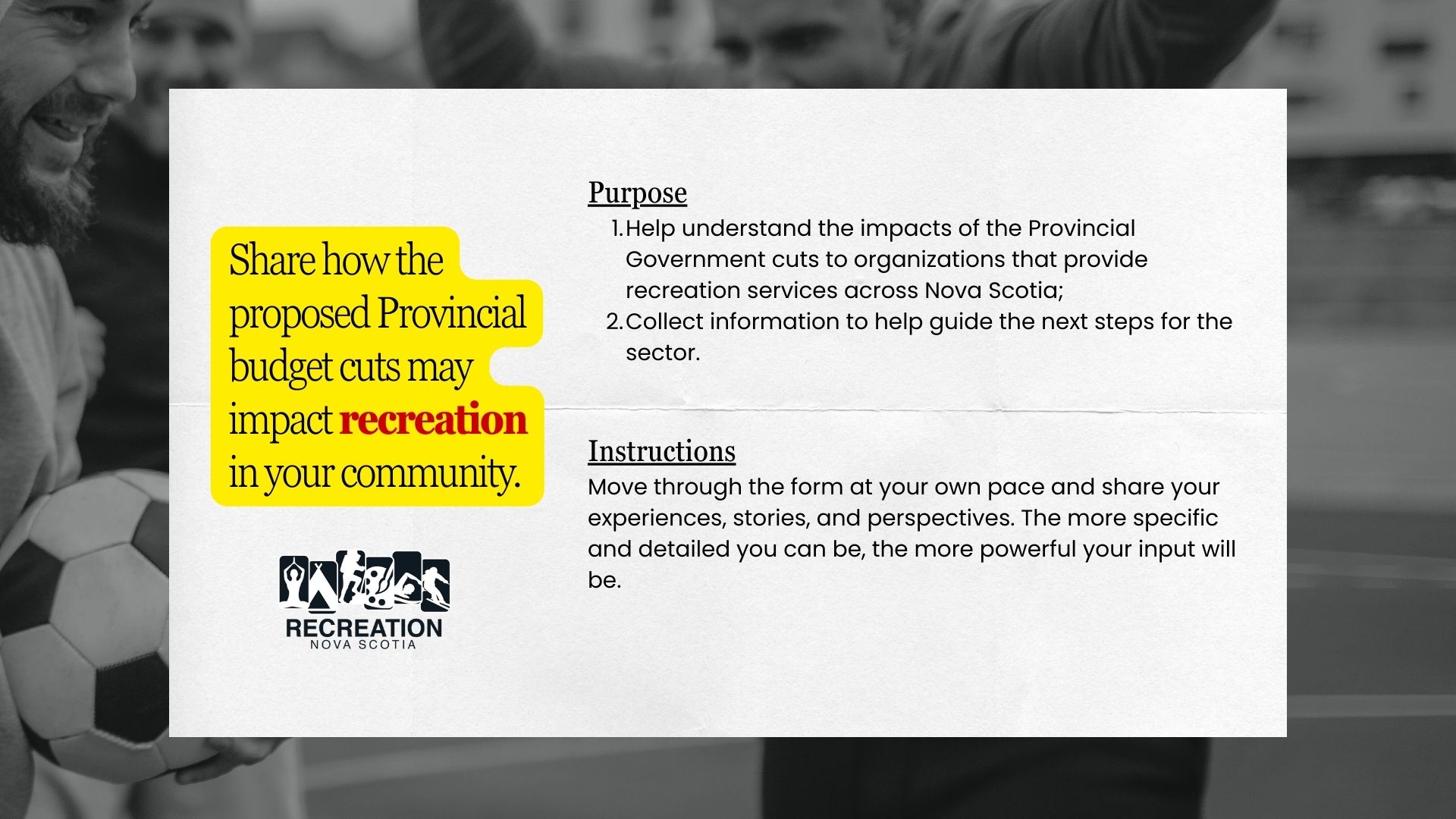
Collecting Stories of Impact - Provincial Budget 2026-27
- Details
- Category: News
Share how the proposed Provincial budget cuts may impact recreation in your community.
What We Need from You:
- What programs or services are funded (e.g., Active Living, community grants, local initiatives)
- Who is impacted (how many people, which groups, how often)
- What participation looks like (e.g., weekly programs, seasonal events, drop-in access)
- What would change if funding is reduced or lost
- A key support for managing physical and mental health
- A way to stay connected, especially in rural communities
- A foundation for inclusive, accessible programming
- A driver of community pride, belonging, and even local economic stability
- People may face increased isolation, reduced activity, and declining health
- Programs built with community trust could disappear
- Organizations may be forced to raise fees or cut services altogether
- Rural communities could lose vital opportunities that help keep people living and thriving locally
Movement as Medicine: Healing Stored Trauma Through Kemetic Yoga
- Details
- Category: Stories & Highlights
A reflection on training, trauma healing through movement, and embodied liberation.
By Fantanesh Attomsa
Hello colleagues, professionals, advocates, students, and community stakeholders,
My name is Fantanesh Attomsa and I am the Regional Physical Activity Consultant (RPAC) for Central Region. I am grateful to share a brief reflection following my recent completion of Kemetic Yoga Teacher Training—and to extend sincere thanks to Recreation Nova Scotia for supporting my participation in this learning.
This unique training offered more than just a technique - it deepened my understanding of something many of us witness across recreation, health, and community care: movement is not an “add-on” to wellbeing – it is a core pathway for processing stored trauma and experiencing true healing and liberation.
Movement as a pathway for processing stored trauma
Trauma—whether acute, chronic, personal, or collective—is stored in different ways throughout the body: in breath patterns, muscle tension, posture, and nervous system activation. For many people, especially those navigating ongoing stress and systemic inequities, the body remains in a state of hypervigilance.
Trauma-informed movement practices can support:
- nervous system regulation and a felt sense of safety within the mind and body
- reconnection to the body (introspection, breath awareness, grounded presence)
- release of chronic tension held in common trauma areas (jaw, shoulders, hips, pelvic bowl)
- improved emotional processing through embodied awareness and rhythm
Movement is an opportunity to create conditions where the body can soften, reorganize, and return to itself at its own pace.
Why Kemetic Yoga matters—especially for Black bodies
Kemetic Yoga is a culturally grounded system rooted in ancient African (Kemetic/Egyptian) philosophy, symbolism, and postures. In the context of community recreation and wellness, it offers something practical and profound as a movement practice that is liberating, identity-affirming, and culturally resonant.
For Black communities in particular, Kemetic Yoga supports healing from racial trauma in ways that are mentally, physically and spiritually healing. Racial trauma—experienced directly and/or carried through generations—shapes how safety, rest, breath, and belonging are felt in the body.
Kemetic Yoga is a practice of:
- embodied regulation through breath, posture, and intentional sequencing that is not focused on performance but rather connection (slow, rhythmic, fluid, visualization)
- cultural remembrance and reconnection—a return to practices that reflect us and our ancient wisdom
- representation and restoration—seeing Blackness depicted as Divine source, and used throughout the practice through visualization and poses that honor our history and spirituality
- liberation through self-actualization—moving beyond survival into joy, vitality, and understanding our true identity
Kemetic Yoga transcends a physical practice and provides a culturally grounded, spiritually resonant, and historically rooted system that invites us to return to ourselves with reverence.
This movement practice offers a unique healing system that reminds us that our history and practices extend deeply into ancient civilizations—into sacred text, symbols, ways of movement, ways of living, and ways of nourishing ourselves that support vitality across this lifespan and the next. Through cultural representation throughout the practice and intentional movement, Kemetic Yoga heals and unifies the mind, body, and an integral piece of Black culture and healing – the Spirit.
The training reinforced a powerful truth: healing is not something we need to create or search for, it is something we can return to. Connecting to our own powerful history and truth allows us to see ourselves for who we truly are, creating the optimal environment for deep, cellular and soul healing. Seeing ourselves represented in ancient texts, symbols, and ways of moving, we can find frameworks that nourish our cultural, mental, spiritual, and physical wellness.
Reflections for our sector
As a sector, recreation holds a unique role: we are often the most accessible entry point to wellbeing. This experience strengthened my belief that culturally grounded, trauma-informed movement belongs in our strategic conversations. Whether through Kemetic Yoga or other identity-affirming practices, representation in physical activity and recreation is not just a trend, but as a legitimate and necessary approach to community care and well-being.
I encourage us all to renew our commitment to:
- centering safety, nervous system support and trauma awareness in movement spaces
- advocating for culturally responsive practices that reflect the communities we serve
- continuing to learn, share, and contribute to culturally-informed approaches within recreation and wellness
Thank you again to Recreation Nova Scotia for their support in my professional development. I’m grateful for the investment in learning that strengthens our collective capacity to serve communities with care, cultural understanding, and integrity.
With gratitude,
Fantanesh Attomsa
If you are interested in learning more about the practice of Kemetic Yoga, feel free to check out these videos:
Pt.1: Sacred Breath:Kemetic Yoga Breathing Exercises to Strengthen Breath & Connect With Life Energy
Pt.2 Sacred Breath:Kemetic Yoga Breathing Exercises to Strengthen Breath & Connect With Life Energy
Kemetic Yoga: T'eken Sequence, Maat Ka, Pose of Immortality, Peaceful Warrior Pose, Goddess Pose
Kemetic Yoga: Sun Salutation, Sesh Pose, & Other Foundational Poses/Benefits
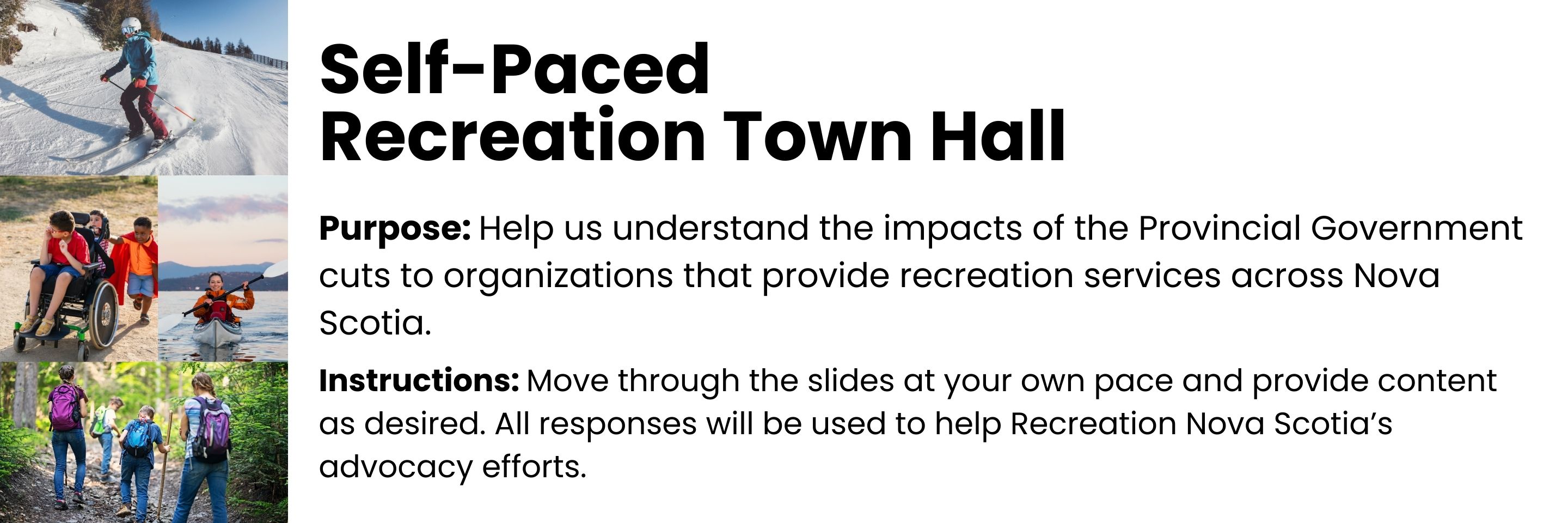
Self-Paced Recreation Town Hall
- Details
- Category: News
- Fewer accessible recreation opportunities for seniors
- Fewer options for arts and cultural programming
- Fewer youth sports programs
- Fewer community events
Stand Up for Recreation Before It's Too Late
- Details
- Category: News
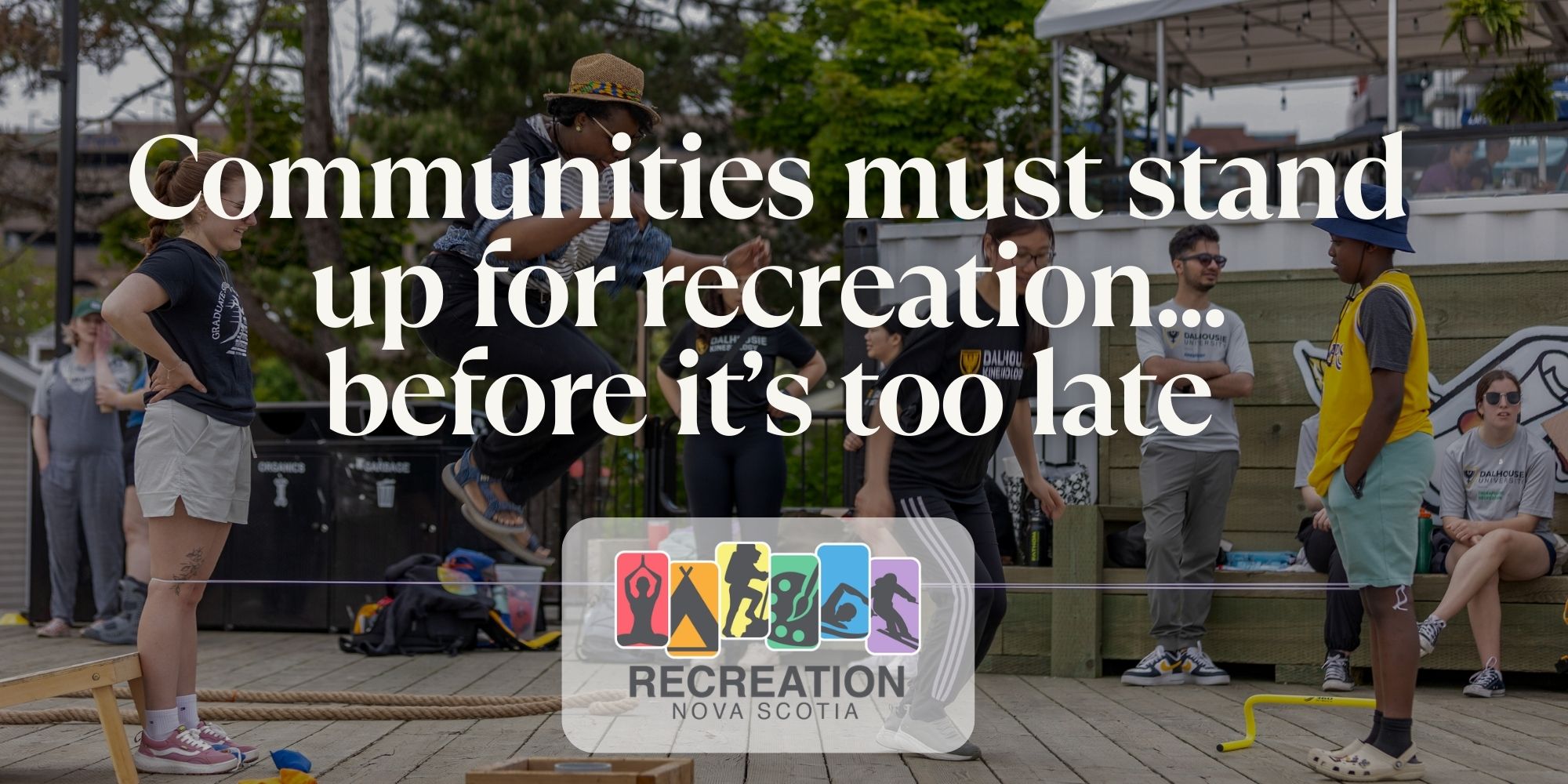
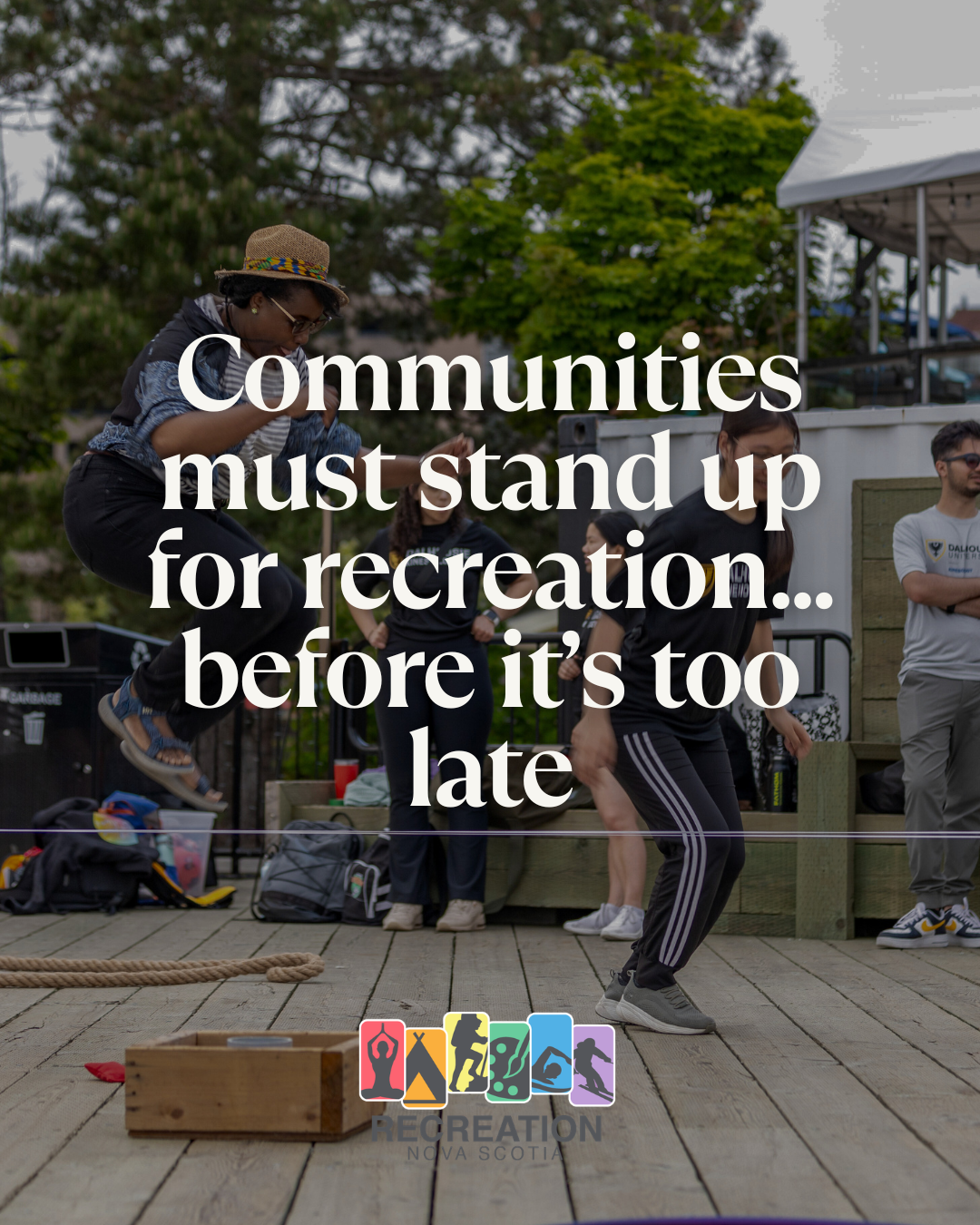
Communities across Nova Scotia are facing a moment that will shape the future of recreation, sport, arts, and culture in our province for years to come.
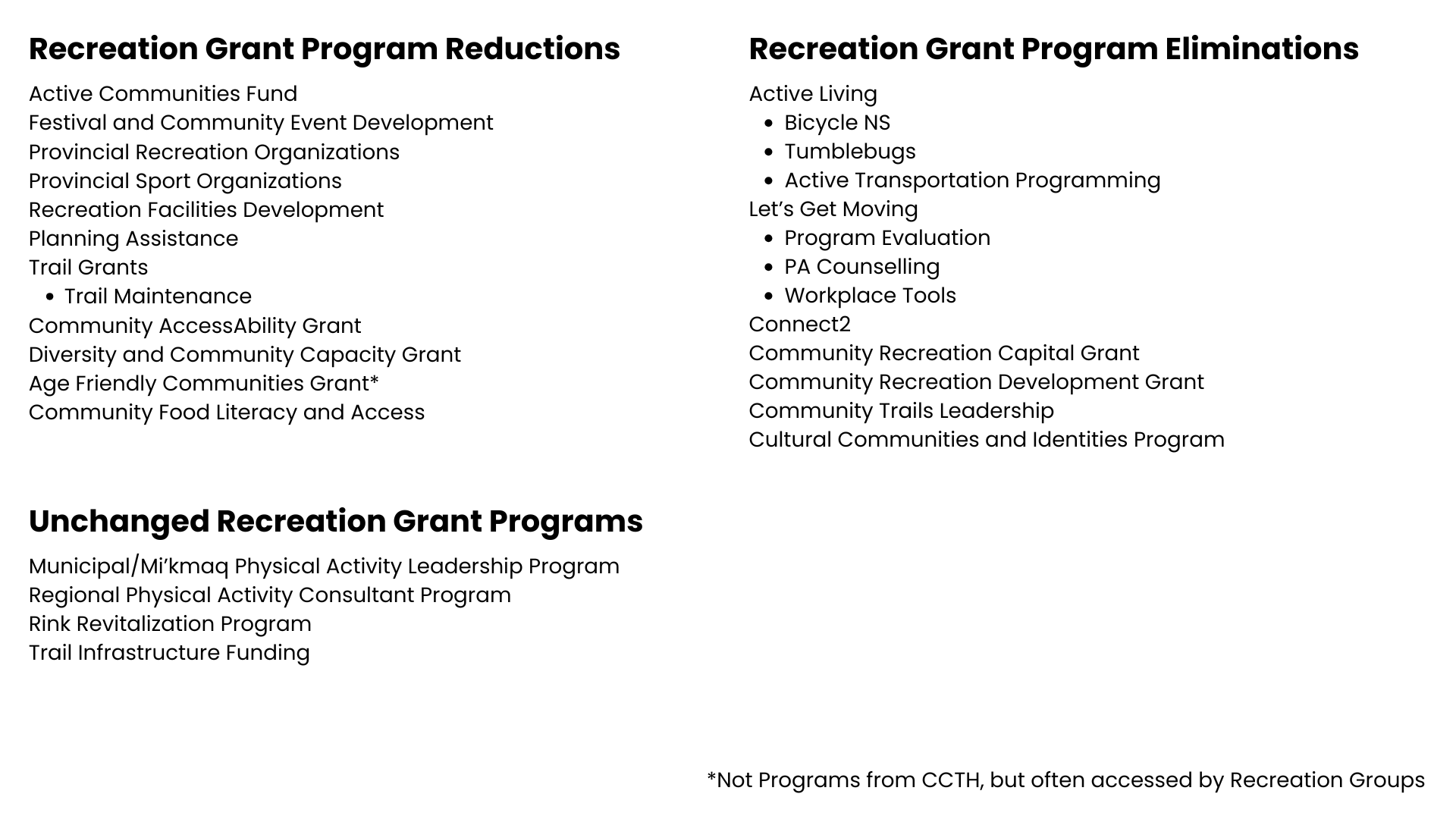
The provincial budget currently before the Legislature proposes deep reductions to funding within the Department of Communities, Culture, Tourism and Heritage. These cuts span 72 grant programs, some with partial cuts and others fully eliminated totalling an investment reduction of $14 million. Included in this is a 50% reduction (approx. $600,000) to the Active Communities Fund, a fund to support communities encourage movement, and a 20% reduction to provincial recreation and sport organizations’ core funding.
While these numbers may appear abstract on paper, their consequences are anything but. These reductions will be felt in communities across Nova Scotia — in fewer recreation programs, reduced opportunities for youth sports, diminished activities for seniors, and fewer community events that bring people together.
Community recreation programs are not luxuries. They are essential pieces of the social infrastructure that keep people healthy, connected, and engaged. Recreation opportunities help prevent chronic diseases, support mental health, reduce social isolation, and create spaces where people of all ages can participate in community life.
At a time when Nova Scotia’s health care system is already under significant strain, cutting programs that help people stay active and well is deeply concerning. Prevention is one of the most effective ways to reduce long-term pressure on hospitals and emergency rooms. When recreation opportunities disappear, the costs do not vanish — they shift downstream into our health care system.
These cuts will also hit rural communities especially hard. In many towns and villages, recreation programs exist because of a combination of volunteer dedication and modest provincial grants. Without those supports, many programs simply cannot continue.
Recreation programs for seniors, arts and cultural activities, seasonal camps for children and youth, community festivals and celebrations, and accessible recreation opportunities for families could all be affected.
For decades, Nova Scotia’s recreation sector of professionals and volunteers has worked with municipalities, volunteers, and community organizations to build spaces and programs that strengthen communities and improve quality of life. These programs represent one of the most effective and affordable investments government can make in public health and community wellbeing.
But right now, those programs and spaces are at real risk.
This is why communities across the province must speak up.
If recreation has made a difference in your life — if your children have played sports, if your parents have participated in senior fitness programs, if you’ve enjoyed walking your dog on the trail, if your community has come together through recreation events — now is the time to make your voice heard.
We encourage Nova Scotians to reach out to their elected representatives and share why recreation matters in their communities. Tell them how recreation programs support the health of your family, the vitality of your community, and the opportunities available to the next generation.
The decisions being made today will shape the strength and wellbeing of our communities tomorrow.
If we want vibrant, healthy, connected communities across Nova Scotia, we must stand up for recreation now — before it is too late.
Contact your MLA and tell them why recreation matters in your community. Find your MLA here and call or email using our document letter template here(15 KB) .
Virtual Recreation Town Hall
- Details
- Category: News
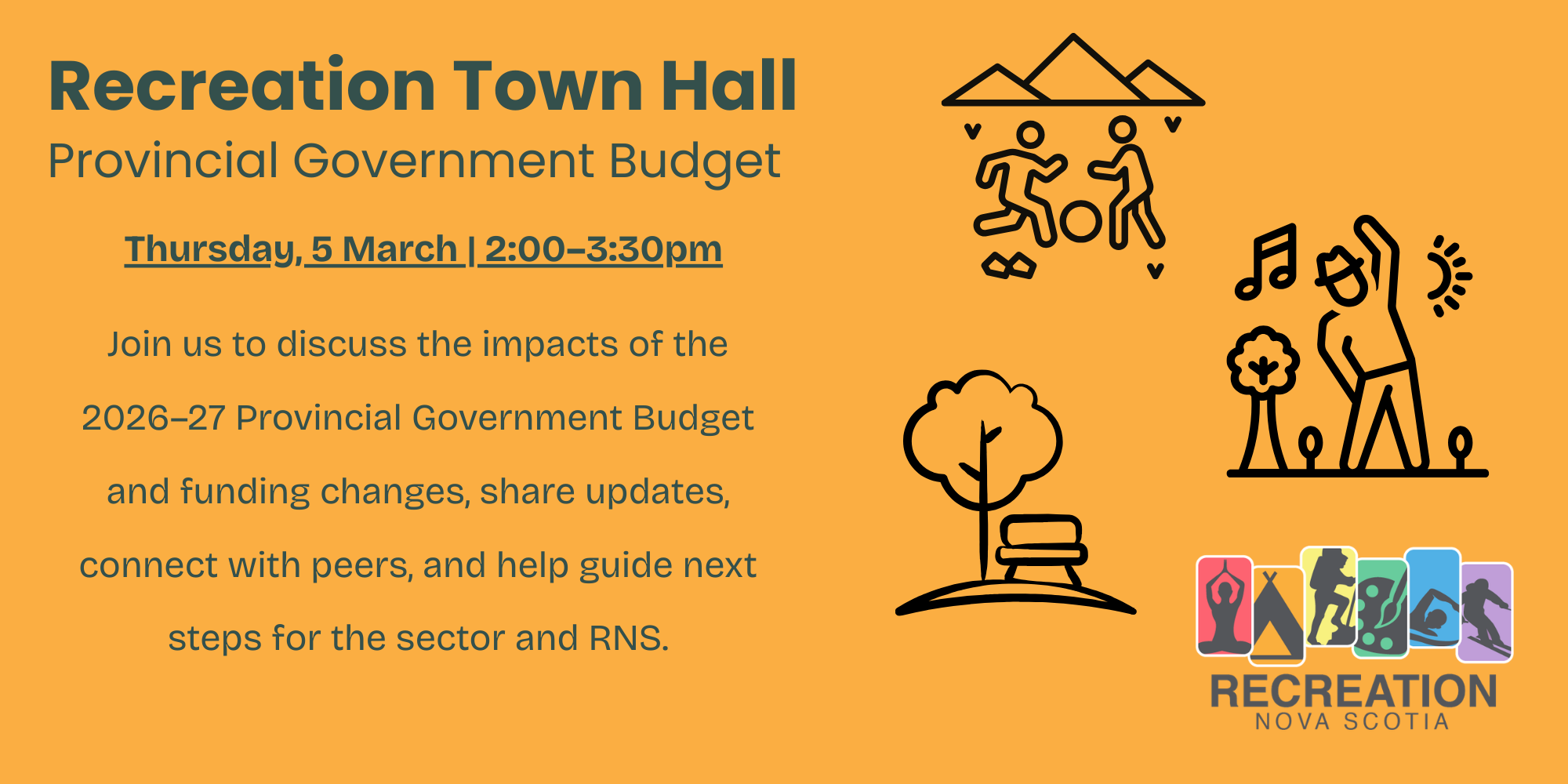
We’re inviting recreation sector practitioners and partners to join us for a Virtual Town Hall on Thursday, March 5th, from 2:00-3:30pm to discuss implications for the sector from the 26-27 Provincial Government Budget. This session will provide an opportunity to check in with sector peers and share what we know so far. We’ll look to gain insight into impacts of proposed funding cuts to help guide next steps for the sector and for RNS.
Statement on Provincial Government Funding Cuts
- Details
- Category: News
Recreation Nova Scotia has issued a statement regarding recent provincial budget decisions that include a reduction to our core funding and significant changes to grant programs that support communities across the province.
These decisions have implications for our organization and for the broader recreation sector. In the statement below, our President and Executive Director outline what we know at this time, the importance of investments in recreation to community wellbeing, and share how we are responding.
pdf Read our full statement here. (91 KB)
We are working with colleagues in Communities, Culture, Tourism and Heritage to understand the changes as information becomes available. At the same time, we’re engaging various partners to coordinate a strategic advocacy response. We thank our membership and the broader sector for their continued commitment as we navigate this issue and welcome your input moving forward.