















News
Letting Their Imagination Run Wild: Loose Parts Play Event in Kings County
- Details
- Category: Stories & Highlights
September 2026
Written by: Kerri Jack
“We had so much fun watching the kids turn their ideas into reality!” – Pop-up Play event organizer, Maria Lahoud
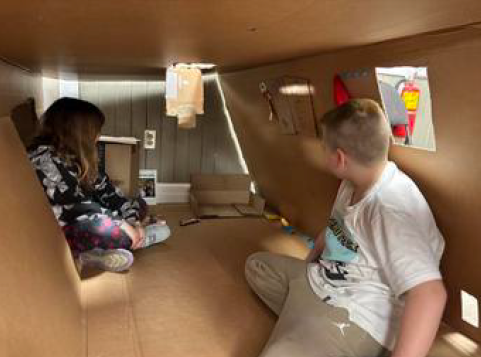
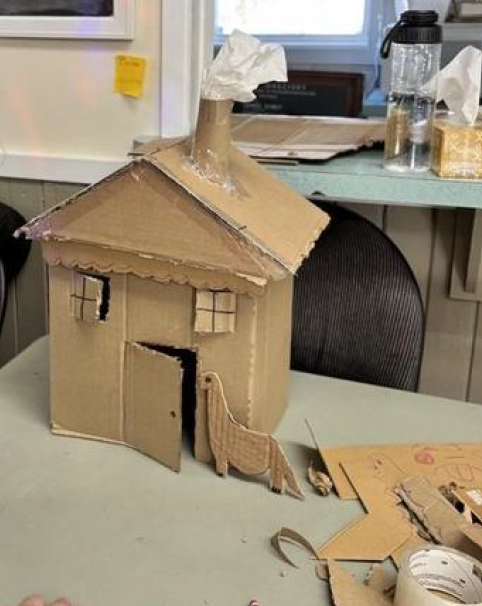
This summer, The Municipality of the County of Kings teamed up with Canning Recreation to host a pop-up loose parts play event at the Canning Fire Hall. Children and their parents were invited to build, create, and let their
imaginations run wild using cardboard, a kid-friendly “Chomp Saw”, screwdrivers, screws, and all kinds of loose parts.The event was guided by the Municipality of the County of Kings Belonging Policy. Maria says the policy helped organizers create an inclusive and welcoming program where children and families could participate, be creative, and feel a sense of connection and belonging in their community.
Maria says it was a rewarding event to be a part of, “We had so much fun watching the kids turn their ideas into reality! They built fairy houses, little treehouses, airplanes, spaceships, and so many other creative inventions. It was wonderful to give kids the space and freedom to imagine, experiment, cut, build, and create something completely their own—and then take their creations home with them.”
The event wasn’t limited to the kids, parents were invited to join in on the fun as well, making this a fun experience for the whole family.
Maria shared one of her favourite moments of the event as an organizer, “One of the highlights was watching a family with three boys work together on a plane-building project. Each child took on a different part of the project, while the boys and their parents explored the room together, searching for all kinds of little pieces that could bring their ideas to life. It was wonderful to see them share ideas, help each other, and build together as a family, with each person contributing to the final creation.”
 Maria said the event did not come without its challenges. Organizers collected enough materials to host 100 people at the event, but advertising challenges resulted in a lower attendance than expected. Maria says that they are considering making the program ongoing in the future, hoping that consistency would would help increase attendance.
When asked if she had any advice for others considering hosting a loose parts program, she said to start small and not to be afraid to get creative with the materials you already have, “Most of the cardboard and loose parts can be collected for free from local stores.” She said the most important part of an event like this is to give kids the freedom to lead the project, “[Don’t] worry about what they are “supposed” to make. The best part is seeing where their imagination takes them!”
Celebrating Dr. Barbara Hamilton-Hinch: A Well-Deserved Order of Nova Scotia Honour
- Details
- Category: News
Recreation Nova Scotia extends our heartfelt congratulations to Dr. Barbara Hamilton-Hinch on being named a 2026 Order of Nova Scotia recipient, one of the province's highest honours.
This prestigious recognition celebrates Dr. Hamilton-Hinch's lifelong commitment to advancing community wellbeing throughout Nova Scotia. Her work has transformed institutions, inspired countless individuals, and challenged systems to become more inclusive and equitable for all.
Dr. Hamilton-Hinch is a professor in Dalhousie University’s School of Health and Human Performance and a former Assistant Vice-Provost of Equity and Inclusion. Through her work in Recreation and Leisure Studies, including teaching within the Recreation Management and Therapeutic Recreation programs, she has dedicated her career to examining the impacts of structural, systemic, and institutional racism, particularly as experienced by people of African descent. Her leadership extends beyond academia through initiatives such as co-founding Imhotep’s Legacy Academy, advancing Black student success, and supporting efforts to improve health equity for African Nova Scotian communities.
For Recreation Nova Scotia, Barb has also been an invaluable partner, leader, educator, and advocate as a recreation professional by trade. Through her guidance, presentations, and ongoing support, she has helped strengthen our understanding of equity and anti-racism within recreation. Her contributions have challenged our sector to think differently, build more inclusive spaces, and recognize recreation's role in creating communities where everyone feels they belong.
Barb's influence reaches far beyond classrooms, boardrooms, and research. She has helped shape conversations across Nova Scotia's recreation sector, encouraging organizations and leaders to move beyond good intentions toward meaningful action. Her work continues to inspire recreation professionals to create programs, policies, and environments that reflect the diversity and strengths of our communities.
Upon receiving the honour, Dr. Hamilton-Hinch shared:
"None of this would be possible without my family, community, friends, and working colleagues. I appreciate your ongoing support and working with me to continue to make a difference."
These words reflect the collaborative spirit that has defined her career and the countless relationships she has built while making a lasting impact across the province.
The Order of Nova Scotia recognizes individuals whose exceptional achievements have enriched the social, cultural, and economic fabric of our province. Dr. Hamilton-Hinch exemplifies this distinction through her unwavering commitment to justice, education, and community leadership.
Congratulations, Barb, on this remarkable and well-deserved honour! Thank you for the wisdom, passion, and leadership you continue to share with Recreation Nova Scotia and communities across the province. Your impact will be felt for generations to come.

Call for Conference Photographers
- Details
- Category: News
We're looking for someone with a creative eye who can document the day's events through high-quality, engaging images that showcase the people, experiences, and impact of recreation in Nova Scotia.
SUBMISSION DEADLINE: September 28, 2026.
Event Details:
Date: Wednesday, October 14, 2026
Time: 10:00 a.m. – 8:00 p.m. (with breaks)
Location: Best Western Glengarry, Truro, Nova Scotia
What We're Looking For:
The successful photographer will capture a variety of moments throughout the conference, including:
- Opening remarks and keynote presentations
- Educational sessions and workshops
- Networking and social interactions
- Exhibitors and sponsors
- Awards and recognition moments
- Candid photos of attendees throughout the day
- General conference atmosphere and venue
Photography will be used in Recreation Nova Scotia's communications, including social media, our website, annual report, promotional materials, and future conference marketing.
Who Should Apply:
Professional photography experience is not required. We welcome applications from professional photographers, emerging photographers, students, and passionate hobbyists.
Applicants are asked to submit:
- A portfolio or examples of previous photography work
- A brief introduction about yourself and your photography experience
Honorarium: The selected photographer will receive an honorarium of $750 for the full day of coverage.
How to Apply:
Please follow the instructions on the JotForm - RNS Conference Photographer Application
Questions can be sent to
We look forward to seeing the conference through your lens!
RNS meets with Minister Ritcey of Communities, Culture, Tourism and Heritage
- Details
- Category: Stories & Highlights
In July, RNS leadership met with Minister Ritcey and senior staff to discuss key priorities impacting recreation and community wellbeing across Nova Scotia.
Representing RNS were President Brendon Smithson, President-Elect Laura Jacobs, and Executive Director Graham Mounsey. Our last meeting took place in early 2025 and so this provided an opportunity to provide updates on the key asks from 2025, as well as highlight opportunity and priorities affecting the recreation sector.
Recreation Leadership Development
RNS provided an update on the new Nova Scotia-grown Recreation Leadership Training program, developed with funding support from CCTH. With the training currently being piloted, we discussed the engagement process and the opportunity for a new provincial standard for recreation leaders in Nova Scotia.
Improving Community Use of Schools
RNS highlighted the work of multiple partners examining issues around community use of schools, identified as a key sector issue across the province. A working group is continuing to assist in moving forward to understand and address with focus of sector level benefit and collective impact with an open Community Use of Schools meeting on 15th September.
Recreation & Emergency Response
The meeting provided an opportunity to highlight the important role that our sector professionals, facilities, parks and outdoor spaces play during emergencies and in community recovery efforts. RNS discussed opportunities to strengthen connections between recreation and provincial emergency planning processes to support protection of and safe access to key community spaces during times of crisis.
National Framework for Recreation & Parks
RNS also highlighted Nova Scotia’s leadership role in the renewal of the National Framework for Recreation & Parks in Canada, expressing it’s commitment to supporting implementation efforts across the province.
We appreciate the Minister Ritcey’s time and willingness to engage in meaningful discussion about the future of recreation in Nova Scotia. RNS remains committed to being a collaborative partner and strong voice for recreation across the province.
Have an issue or opportunity we should be elevating?
We’d love to hear from you. The strongest sector conversations are grounded in the experiences of our members. Share the challenges, opportunities, and ideas that matter most in your community. Your input helps guide our work and strengthens our collective voice.
Rec Highlight: My Journey with Equine Assisted Learning
- Details
- Category: Stories & Highlights
Personal Development…but Add Horses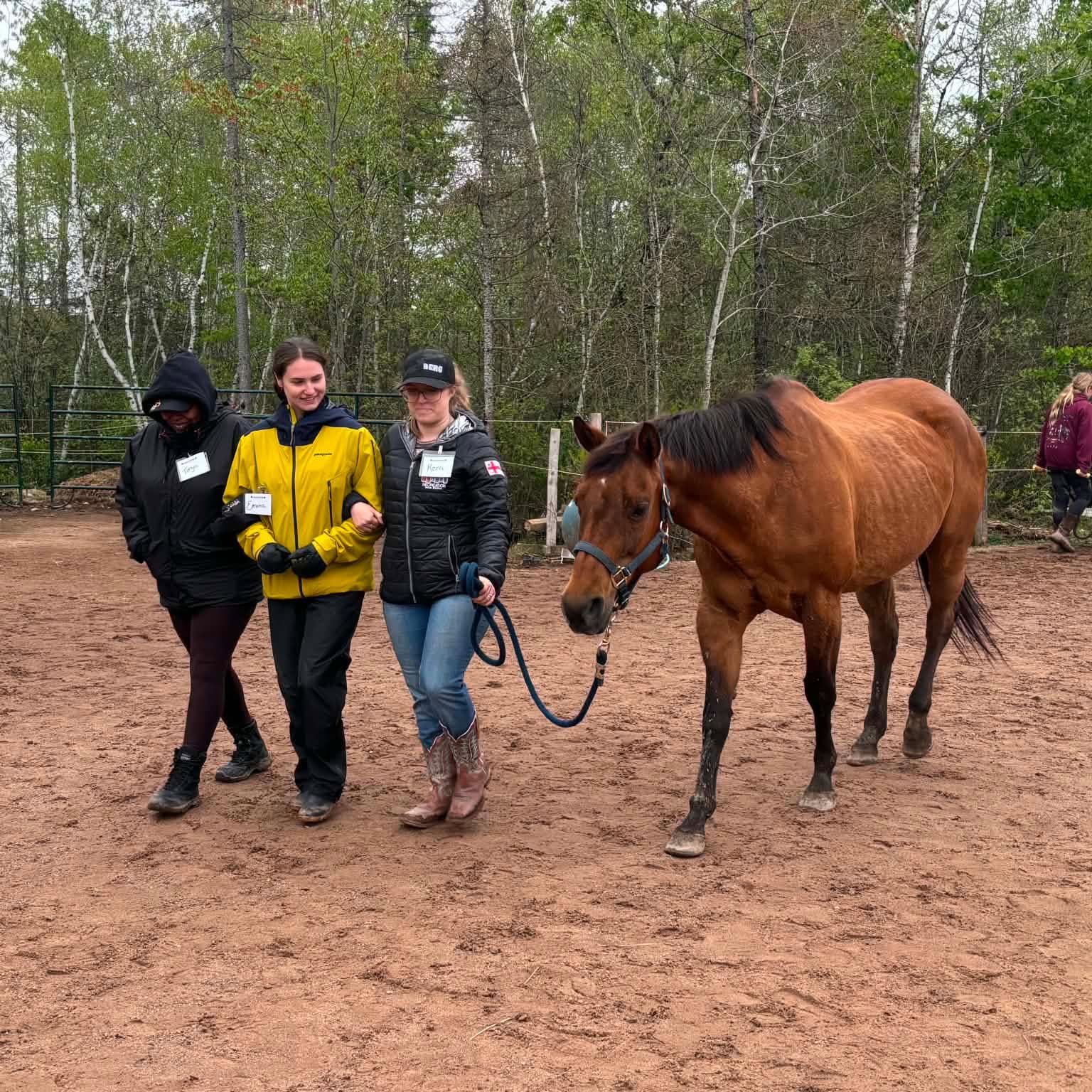
By Kerri Jack
When I started hanging out at my local barn, I had no idea my journey with horses would lead to spending 5 days in a cold shed and muddy arena learning how to facilitate personal growth with the help of horses…but that is exactly what happened.
My story starts two years ago, when a good friend of mine invited me to spend the afternoon at a local horse barn. I happily agreed, not really anticipating much more from the experience than an afternoon spent with a friend, but I instantly felt at home. My whole personally may have changed after that day; I was now set on being a horsey girl. I almost instantly connected with the largest horse on the property, a draft cross named Hoss. Hoss was purchased as a “husband horse”, a large, bomb proof horse that any man could ride on the trails when the opportunity arose. Because he wasn’t in active work, he tended to be a bit harder to catch in the field and wasn’t always the first choice of regular riders or visitors.
But for some reason, I saw him and he saw me. It was an instant connection.
That is where my journey with horses truly began. I spent a lot of time at the barn with Hoss as my horse of choice. He seemed to choose me as much as I chose him. He would often approach me in the field and was so patient as I learned the basics of horse care, like how to properly put on a halter, where to attach a lead line and what side to stand on, and even tolerated the odd eye poke, twisted rope or wrong move.
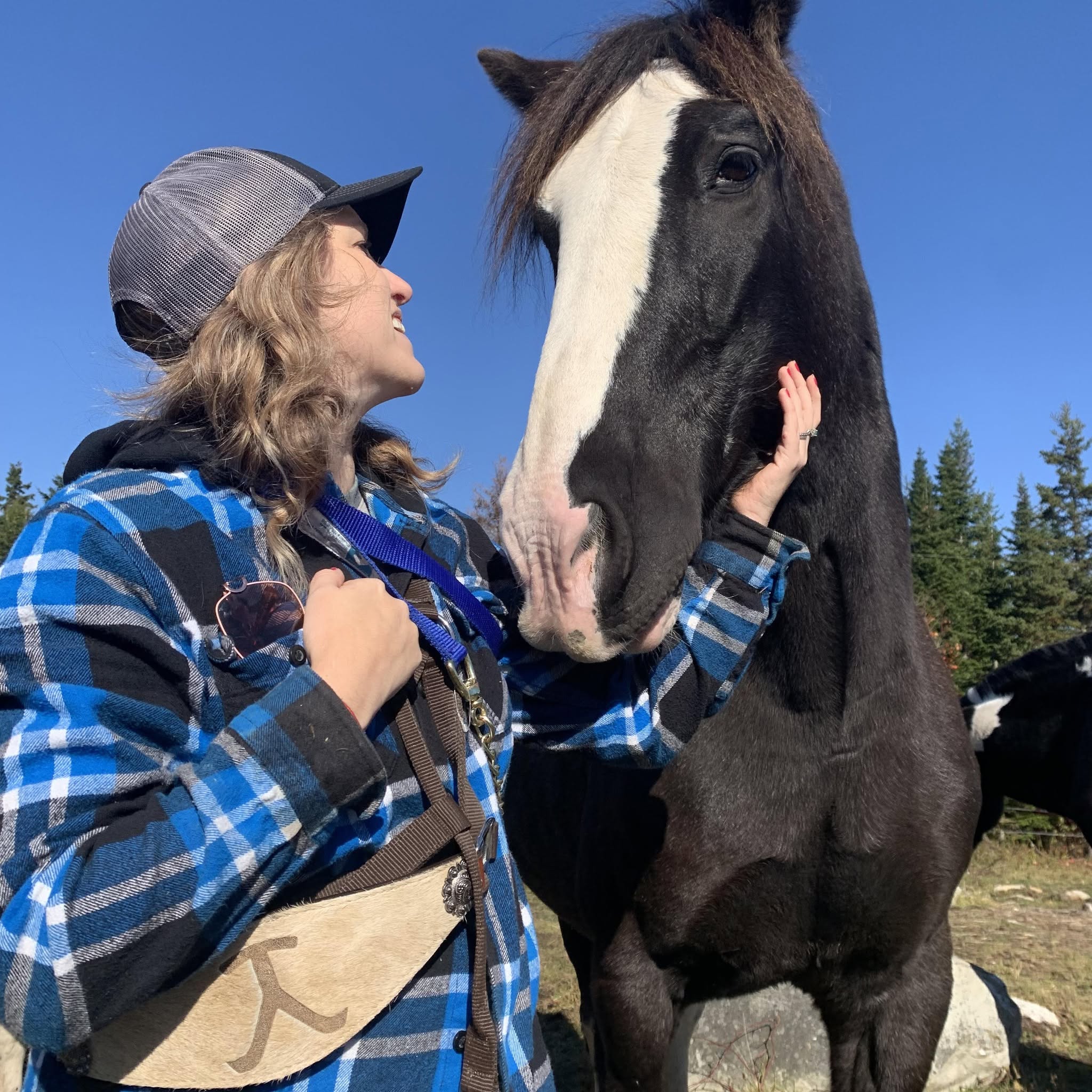 My first couple of months consisted of learning about horses; their unique language and how they communicate, heard dynamics and horse care. But most importantly, I realized how insanely healing it was to spend time with horses. I didn’t think I had much interest in riding horses at first, until one day, out of no where, I jumped on Hoss bareback (don’t freak out, he’s bombproof, remember?). I soon began taking riding lessons and even attended a few shows in the summer of 2025. Though I enjoyed riding and showing, I never really lost that desire to connect with horses in a non-riding capacity.
Throughout my first year at the barn, I had been introduced to the idea of equine assisted learning (EAL). EAL is a hands-on, non-riding, experiential approach to personal and professional growth that involves working with horses. Through activities with the horses, people explore skills like communication, confidence, emotional awareness, problem-solving, teamwork, and leadership. An example of an EAL activity would be to navigate a horse through an obstacle course with a four-person team, except one team member is blindfolded, one cannot speak, one cannot hear and one cannot use their hands. How will you work together to achieve your goal and most importantly, will your horse respond to your effort? What will you do if your horse doesn’t follow the plan? What will you learn about yourself, your teammates and your horse through the process. That’s EAL.
In the winter of 2026, I was approved for a $12,038 grant through the Government of Canada’s New Horizons for Seniors Program to develop and host an EAL program in the community, which would be offered for free to seniors. Now the hard part began, to create this program from the ground up.
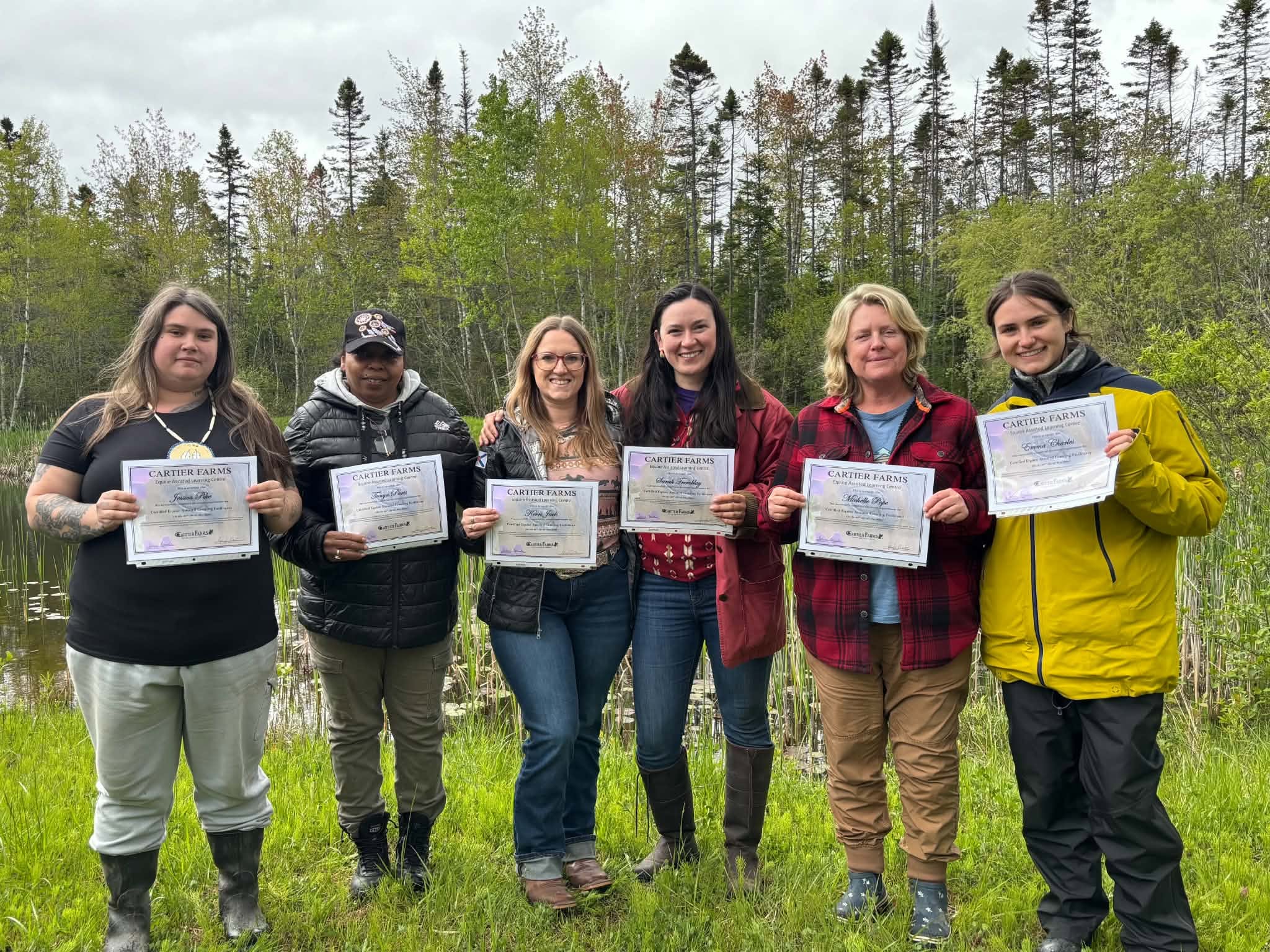
After connecting with an online EAL community, finding a local mentor and doing a lot of research, it was a no brainer to go through the Cartier Farms Equine Assisted Learning certification program. Cartier is the leading provider of EAL programming and certification in North America. They have been in the business for 24 years and have been the subject of three major research studies. Thanks to the leadership of Jessica Pike, board member of the non-profit therapeutic farm, Arrow of Light Association, I was able to take the certification right here in Nova Scotia. Jessica worked tirelessly to secure funding through the Native Council of Nova Scotia’s Aboriginal Peoples Training & Employment Commission to host a Cartier Farms Certification course in Elmsdale and to fund four Indigenous women to complete the certification.
Now we are at the part of the story where I found myself in a cold shed and muddy arena for 5 days.
The course took place in Elmsdale, utilizing an outdoor arena at a local hobby farm and the shed of a nearby home for classroom work. In true Nova Scotia fashion, it was cold, rainy and foggy for most of the week. The course was mentally tough. The mornings were spent in the classroom, learning the program theory and the afternoons were spent in the arena, facilitating EAL programming. The evenings were for homework and exam preparation. For 5 days straight, I lived and breathed EAL.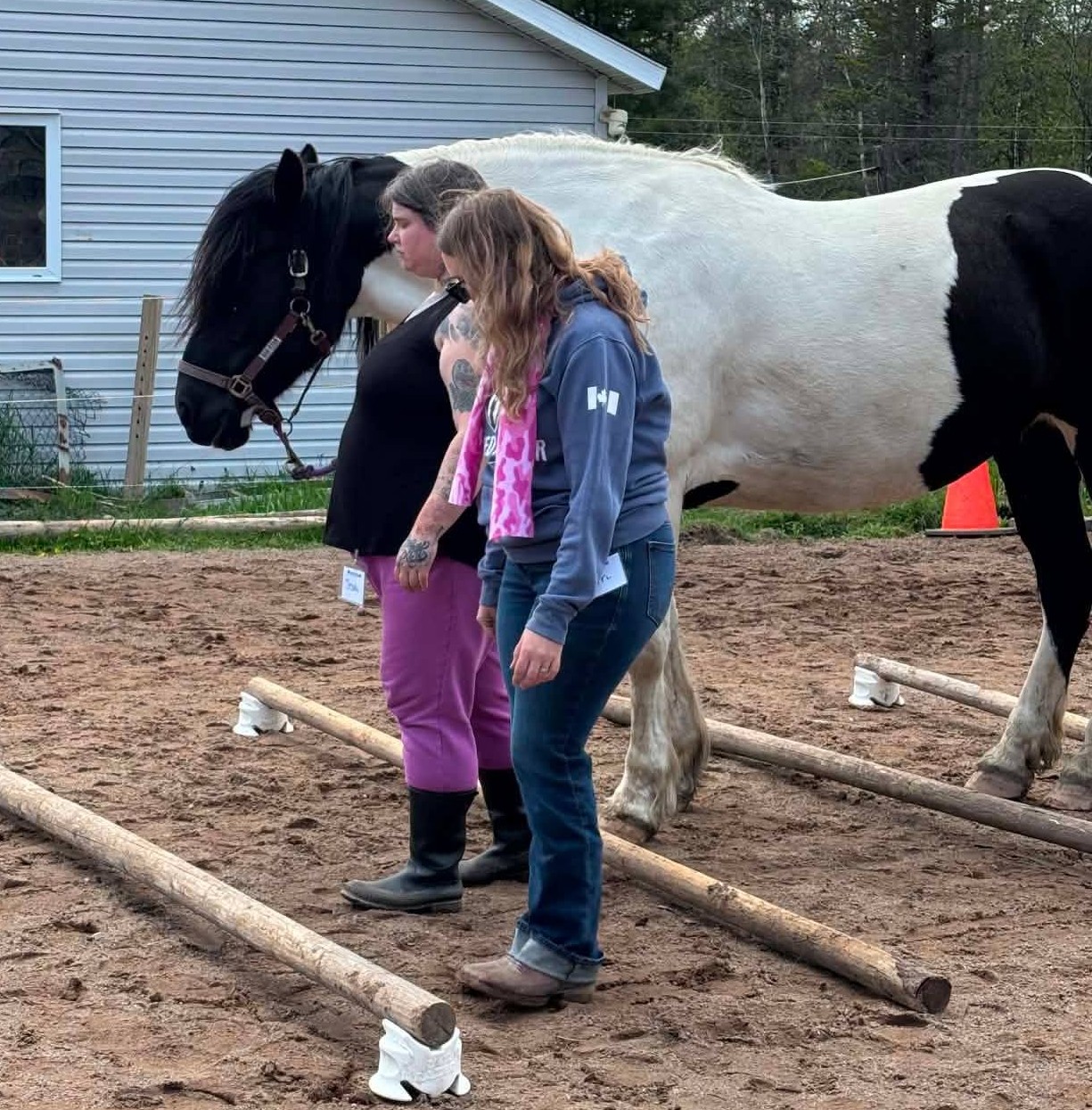
I was surprised to be tasked with facilitating a group of volunteers on day one of the course, after only one morning of instruction and a lunch period to learn the activity and prepare. I got through it, but I will not lie to you, some tears were shed. I learned quickly that my recreation experience did not prepare me to be an effective EAL facilitator. I had to practice saying less and intervening less so that I was not interrupting the learning experience of the participants in my group.
I learned quick that facilitating EAL is not about me, it is about the participants and the horse. I had one participant who struggled during portions of the activity, and I wanted so much to step in and make the experience positive for them, but that would have been making the experience about me. Personal growth and awareness happen during a challenge or uncomfortable experience. That participant learned something about themselves that day and eventually asked to return for the next 3 days of facilitator training. Day one was a powerful day for me. Even though I broke down and shed some tears during our activity debrief, I learned how powerful EAL is and the impact that even one session can have on a person. That was a lesson I will never forget.
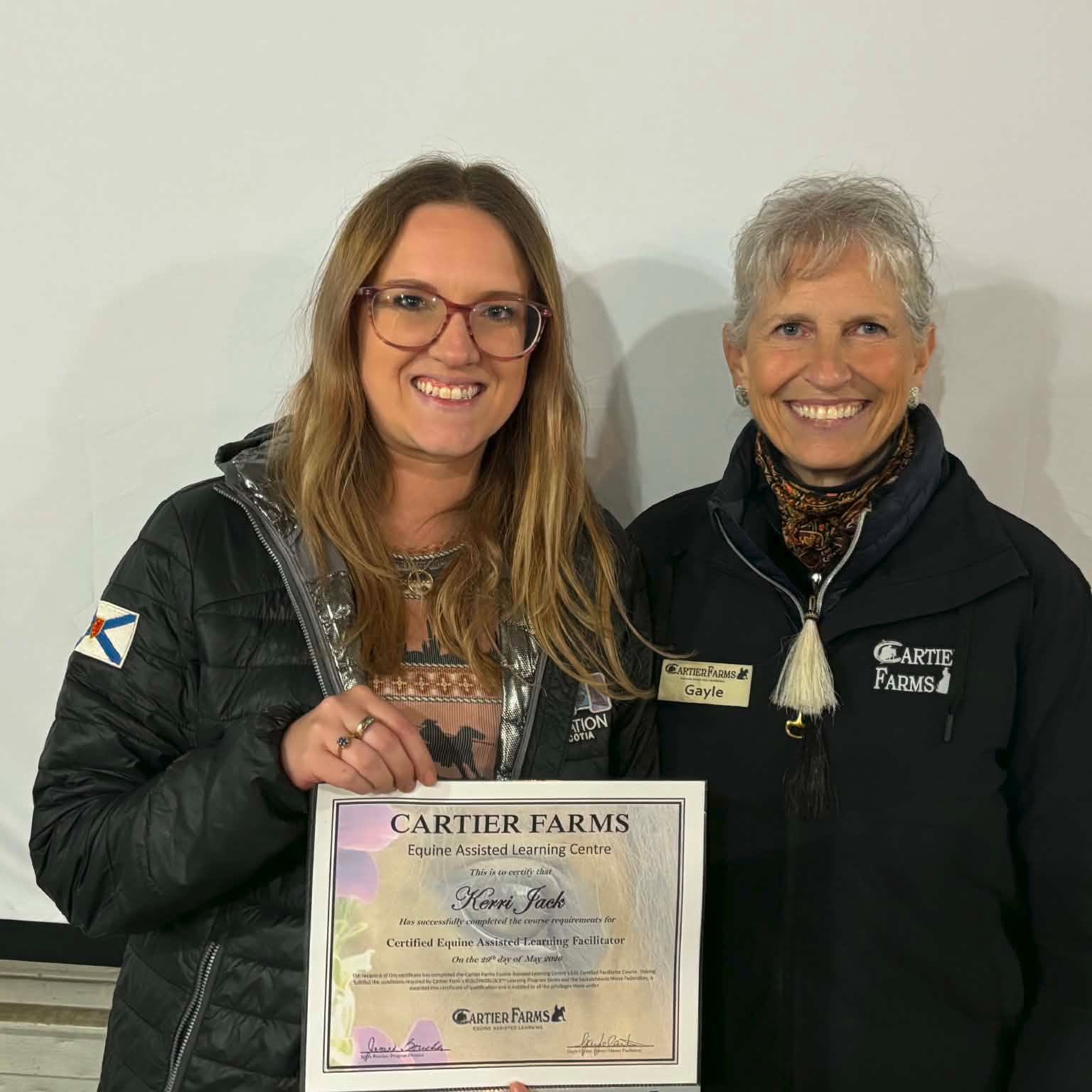 The next four days were very similar. Classwork when it was raining and arena work when it wasn’t. Sometimes I facilitated, sometimes I participated. In between the course requirements, I learned more about my classmates, instructors and hosts and made connections that I hope will last a lifetime.
I left that course with more than a certification…I gained new friendships with a group of powerful and inspiring women; I learned more about myself as a facilitator and a renewed focus and determination to share this amazing program with anyone that will listen. Planning and preparations are currently underway for an EAL program in my community, beginning hopefully over the summer and continuing into the fall.
Over the next few months, if I lead a sentence with, “I just became certified as an equine assisted learning facilitator and…” just bear with me. So much of my professional, volunteer and personal life can be connected to what I learned during that cold week in May and also….just about everything could benefit from adding horses.
Recreation Leaders from Across Atlantic Canada Gathering in Halifax for Regional Conference
- Details
- Category: Stories & Highlights
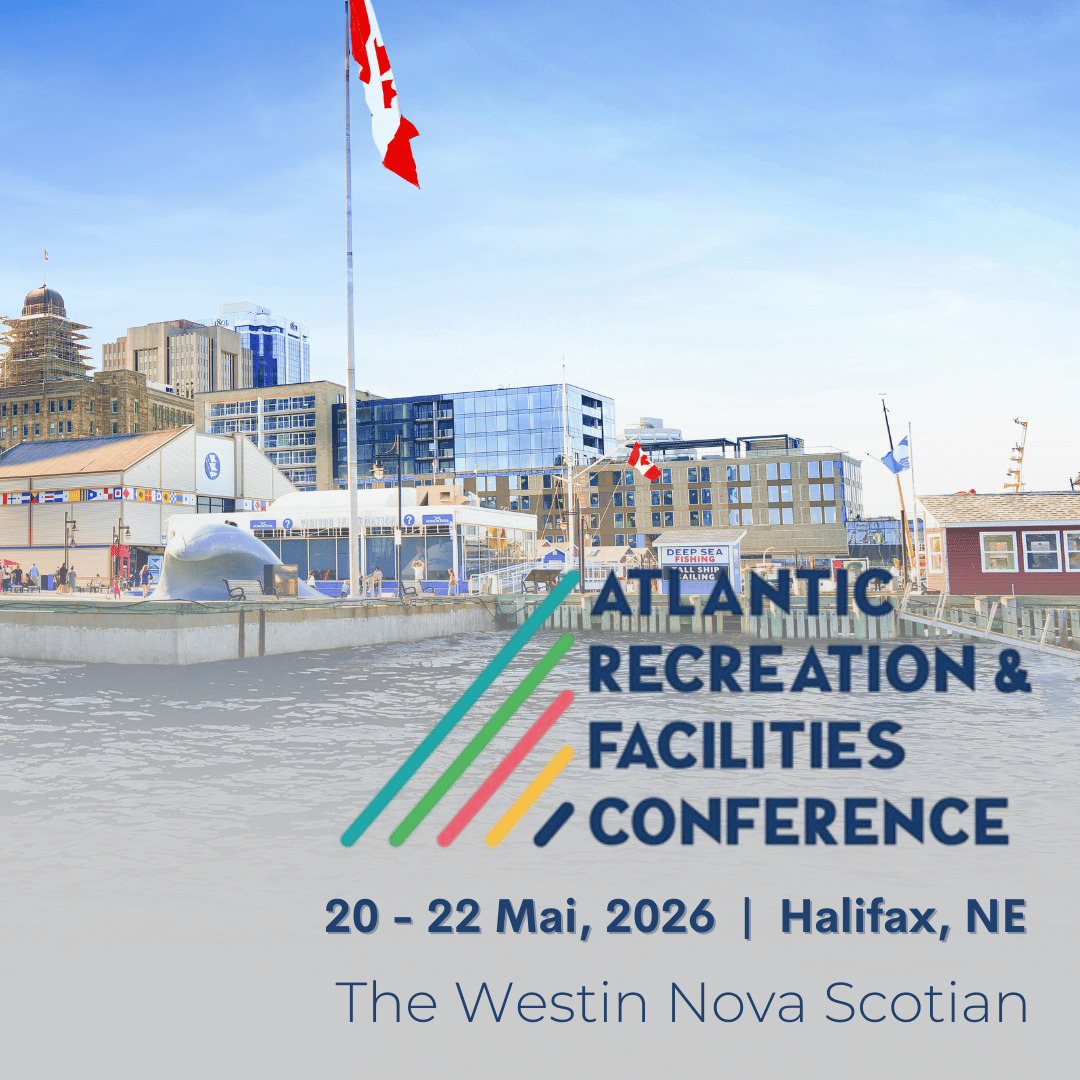
From emergency response to community wellbeing, recreation practitioners and recreation facilities are stepping up to play a bigger role than ever in community life. From May 20-22, 2026, over 200 leaders from across Atlantic Canada and beyond are gathering in Halifax to explore what comes next.
Recreation Nova Scotia (RNS) and the Recreation Facility Association of Nova Scotia (RFANS) are proud to host the upcoming Atlantic Recreation & Facilities Conference (ARFC), taking place May 20-22, 2026, at the Westin Nova Scotian in Halifax.
Under the theme Powering Possibility: Tools for Today’s Recreation and Facility Leaders, this year’s conference will welcome delegates, sponsors, and exhibitors for three days of learning, collaboration, and networking. Held biennially, ARFC brings together recreation professionals, facility operators, municipal leaders, and sector partners, reflecting a shared commitment to strengthening recreation, community infrastructure and services across the Atlantic region.
As recreation departments and facilities are increasingly called upon to respond to broader community challenges, including emergency response, homelessness, climate resilience, community wellbeing, and inclusive public spaces, the conference will focus on the evolving role recreation plays in supporting healthy, connected, and resilient communities.
“The recreation sector continues to adapt and step up to meet the evolving needs of communities across the region, helping shape healthy, active, and vibrant communities. ARFC provides an important opportunity for those recreation and facility leaders to learn from one another and build knowledge together as we navigate many similar challenges and opportunities across the four provinces”. said Graham Mounsey, Executive Director, Recreation Nova Scotia.
“Recreation facilities are becoming increasingly important pieces of community infrastructure during emergencies.” said Recreation Facility Association of Nova Scotia Executive Director, Jennie Greencorn. “Whether providing shelter during extreme weather events, operating as cooling or warming centres, or supporting community recovery efforts, recreation facilities and those who operate them are playing a key role in local community resilience.”
A featured session, The Changing Role of Recreation when Emergencies Occur, will explore how recreation facilities and professionals are becoming essential community hubs during emergencies and natural disasters. The panel will bring together recreation professionals who have first-hand experiences of adapting recreation facilities and services to respond to community needs during times of crisis. They will share their experiences and lessons learned, facilitated by Nancy Dubois of the Canadian Parks & Recreation Association.
Delegates will also participate in behind-the-scenes tours of recreation and sport facilities across Halifax, including the Halifax Waterfront, the Halifax Commons Pool and Emera Oval, Dalhousie University’s Dalplex, the new Oulton-Stanish Centre, and Wickwire Field. RNS and RFANS are pleased to welcome representatives from our funding partners at the Province of Nova Scotia, underscoring the ongoing commitment to recreation, community infrastructure, and the professionals who support communities across the province.
Additional Information:
The event is hosted in partnership with Recreation PEI, Recreation NB | Loisirs N.-B, and Recreation Newfoundland & Labrador. Further details about the conference are available at ARFC.ca
Recreation Nova Scotia is a provincial not-for-profit organization that supports, promotes, and advocates for the values and personal, social, economic, and environmental benefits of recreation and leisure through education, partnerships, and sector development.
The Recreation Facility Association of Nova Scotia is a provincial not-for-profit that supports recreation facility professionals and operators providing leadership in developing, promoting and advocating excellence in recreational facilities, operations and personnel.
Contacts:
Graham Mounsey, Executive Director
Recreation Nova Scotia
902-789-9052
Jennie Greencorn, Executive Director
Recreation Facility Association of Nova Scotia
902-425-5450